
Romeoville Epoxy Flooring installs polyaspartic floor coating systems in Romeoville, IL, serving surrounding cities including Lemont, Shorewood, Burr Ridge, Mokena and Warrenville. Over more than 20 years on concrete, we have watched polyaspartic go from a specialty product to the topcoat we reach for most often, because of how well it handles sunlight, salt and traffic.
Polyaspartic is a fast-curing relative of polyurea. It can be walked on within hours rather than a day, it stays clear and color-stable under UV, and it resists abrasion and the deicing chemicals tracked in every winter. Those traits make it a natural wearing surface over an epoxy base, or a complete system on its own where a fast return to service matters.
Speed is also its biggest risk. A coating that cures in minutes punishes poor preparation and bad timing, so our polyaspartic work starts the same way as everything else we do: ground concrete, tested moisture and a schedule set by the conditions on the slab.
What Makes Polyaspartic Different
Fast Cure and Quick Return to Service
Polyaspartic cures far faster than a standard epoxy, which shortens the time a garage or business is out of use. Depending on the system, foot traffic can return the same day and vehicles soon after, rather than waiting through a long cure.
That speed is useful, but it is not a reason to skip steps. We still grind, repair and test the slab before the first coat goes down, because a fast-curing coating over a poor surface simply fails faster.
UV Stability and Color Retention
Most epoxies amber when sunlight reaches them, turning a light gray floor tan over time. Aliphatic polyaspartic resists that change, so it is the topcoat we use wherever a floor sees daylight through a garage door, a storefront or a row of windows.
UV stability also matters for decorative floors. A carefully chosen flake blend or metallic color keeps looking the way it did on installation day when it is protected by a polyaspartic topcoat.
Abrasion and Chemical Resistance
Polyaspartic stands up well to abrasion from tires, carts and foot traffic, and to the oils, fuels and deicing salts a garage or shop floor collects. That combination is why it ends up as the wearing layer on most of our garage and light commercial systems.
The surface also stays easy to clean. Spills sit on top instead of soaking in, so a quick wipe or mop handles most of what a working floor collects, and the gloss or satin finish you chose looks the same after cleaning as it did before.
Topcoat Over Epoxy, or a Full Polyaspartic System
Polyaspartic as the Topcoat
On most garages and many commercial floors, the best build is a 100% solids epoxy base with a polyaspartic topcoat. The epoxy wets into the ground concrete and builds thickness at a sensible cost, and the polyaspartic on top handles sunlight, salt and abrasion.
This hybrid build is what most of our garage floors use, usually with a vinyl flake broadcast locked between the two layers. It plays to each material’s strengths instead of asking one product to do everything.
A Full Polyaspartic Build
A full polyaspartic system uses polyaspartic for the base as well as the topcoat. It cures faster from start to finish and suits jobs where downtime has to be as short as possible, such as a busy service bay or a store that can only close overnight.
The tradeoff is a narrower working window and less tolerance for difficult slab conditions. We recommend it when the schedule demands it and the slab, temperature and moisture readings support it, not as a default.
Residential Polyaspartic Floor Coating
Garage Floors and Winter Salt
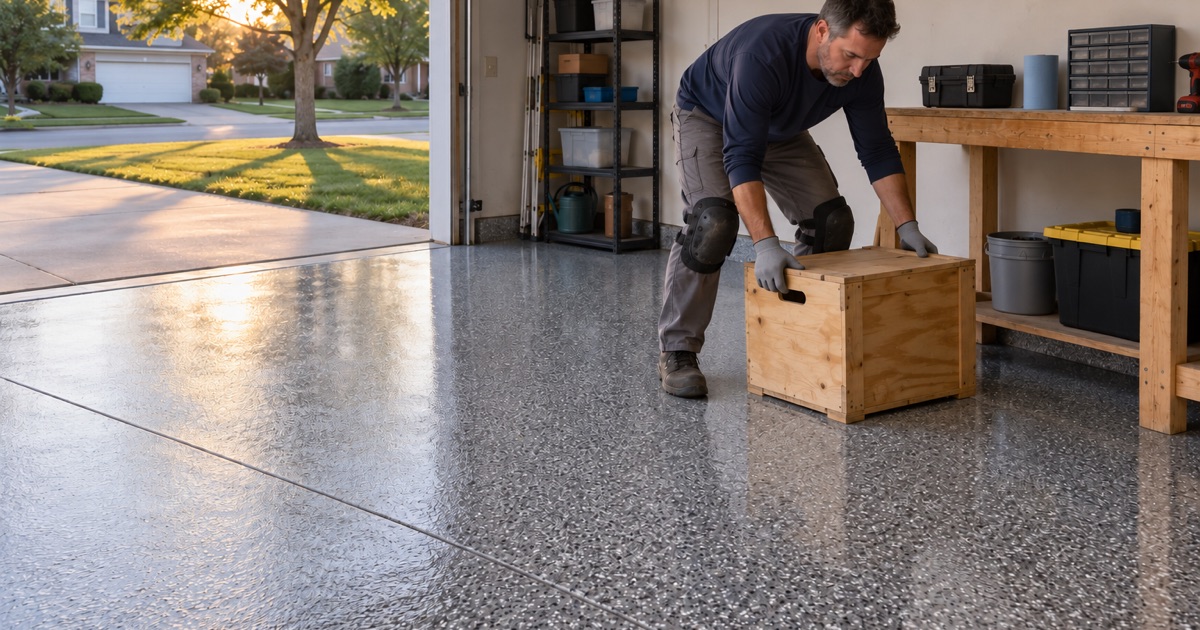
A Will County winter sends rock salt and calcium chloride brine into the garage on every set of tires. A polyaspartic topcoat over an epoxy and flake base keeps that brine on the surface, where it can be squeegeed out the door instead of soaking into the concrete and breaking it up.
The topcoat also resists hot tire pickup, which lifts thin coatings when warm tires cool and grip. Built over a properly ground slab, a full polyaspartic topcoat holds its bond where the car actually parks.
Basements, Workshops and Patios
Inside the house, polyaspartic topcoats suit basements, workshops and home gyms, where they resist scuffs and chemical spills. On a covered patio or screened porch, the UV stability that matters in a garage matters even more.
Basements still start with moisture. A polyaspartic topcoat does not change what is happening under the slab, so testing comes first and a moisture-mitigation primer goes in where the readings call for one.
Commercial Polyaspartic Floor Coating
Shops, Service Bays and Showrooms
Auto shops, service bays and showrooms often cannot close for long. A polyaspartic system lets us coat a bay or a showroom section and have it back in use quickly, while resisting oil, coolant and tire marks better than a bare or sealed slab.
Around vehicle lifts we coat carefully so anchor points stay accessible and sound, and we can add a broadcast texture in the work zone so the floor keeps its grip when fluids are spilled during a repair.
Retail and Tenant Spaces
When a storefront turns over between leases, the window for floor work is short. Polyaspartic systems fit that schedule, and because they hold their color under store lighting and sunlight, the floor looks the same months later as it did at opening.
Working Around Business Hours
We schedule commercial coating around the hours a building has to run, including overnight and weekend windows. Grinding dust is captured at the grinder, never washed toward a floor drain or storm inlet, so nearby work areas stay clean.
Larger floors are usually done in phases, one zone at a time, so part of the building stays in use while another is being coated. The fast cure of polyaspartic is what makes that kind of phasing practical on a working floor.
Timing, Moisture and Cure
Dew Point and Slab Temperature
Polyaspartic is sensitive to moisture condensing on the slab, which happens when the surface temperature sits close to the dew point. We measure the dew point spread before applying it, and we will not coat a floor when the conditions are wrong.
In practice that means heated spaces can be coated year-round, while an unheated garage in deep winter usually waits for spring. We tell you that at the estimate, not after a cloudy or soft finish.
Moisture Testing Before Coating
Moisture testing is part of the scope on every polyaspartic job. We use ASTM F1869 calcium chloride kits or ASTM F2170 in-situ relative humidity probes, depending on the slab, and plan the primer and base coat around the readings.
Pricing and Paperwork
Quoted Per Square Foot
Polyaspartic systems are priced per square foot for the build we propose. Whether it is a single clear topcoat over epoxy and flake or a full multi-layer polyaspartic system, the proposal lists each layer and the finished thickness so you can compare it with what goes down.
The number moves with the condition of the slab as much as with the coating. Removing an old sealer, rebuilding spalled joints or adding a moisture-mitigation primer each adds a line, and we would rather show you those lines than hide them inside a single national per-garage price.
Written Contracts and Honest Warranties
Home jobs get a written contract and the state’s consumer-rights pamphlet before work begins. We also read through the warranty exclusions before you sign, moisture first, because no topcoat, however tough, can hold against water pushing up from below the slab.
Coatings Within Illinois VOC Limits
Illinois limits the VOC content of floor coatings, and that limit applies to the installer as well as the manufacturer. We choose polyaspartic products that meet the state rule for every job in the area.
The rule matters here because the Chicago region is an ozone nonattainment area, and solvent-heavy coatings add to the problem. Compliant products also mean less odor in an attached garage or an occupied building while the floor cures.
- 20+ Years on Concrete
- Moisture Tested Before Quoting
- Per-Square-Foot Written Quotes