How an Epoxy Garage Floor Job Runs
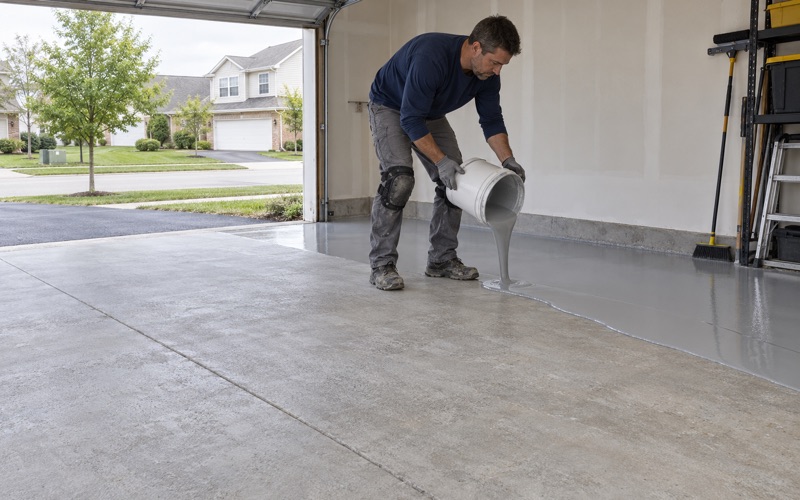
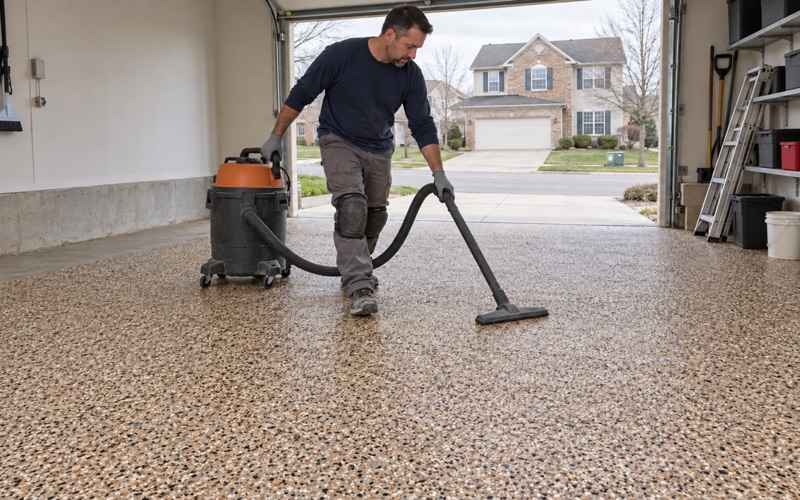
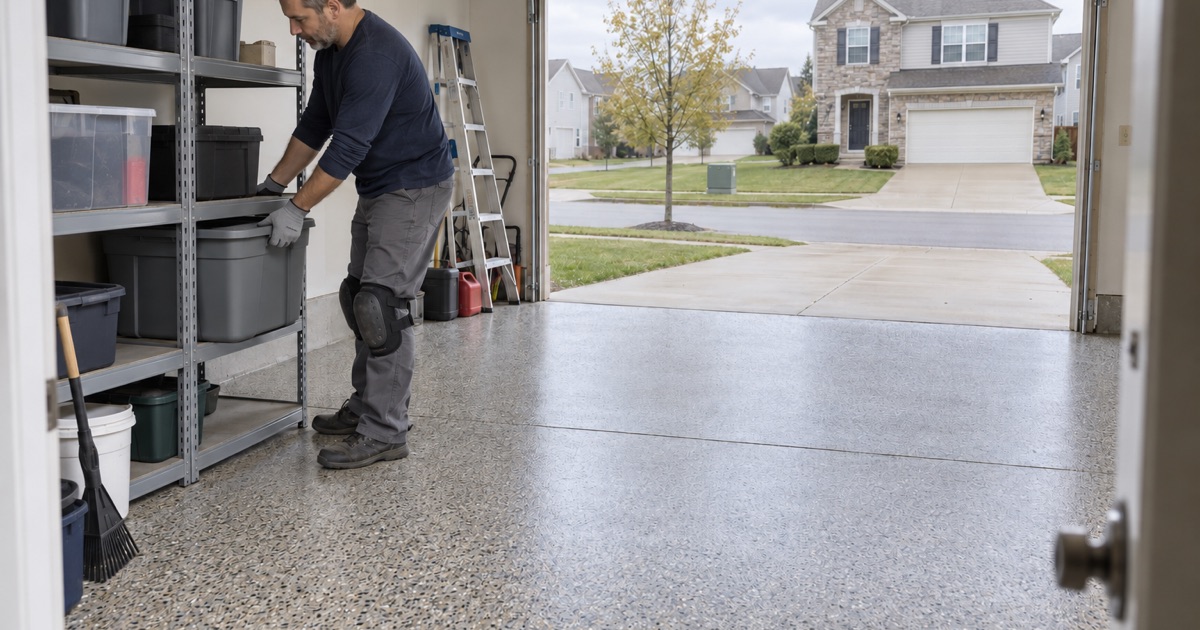
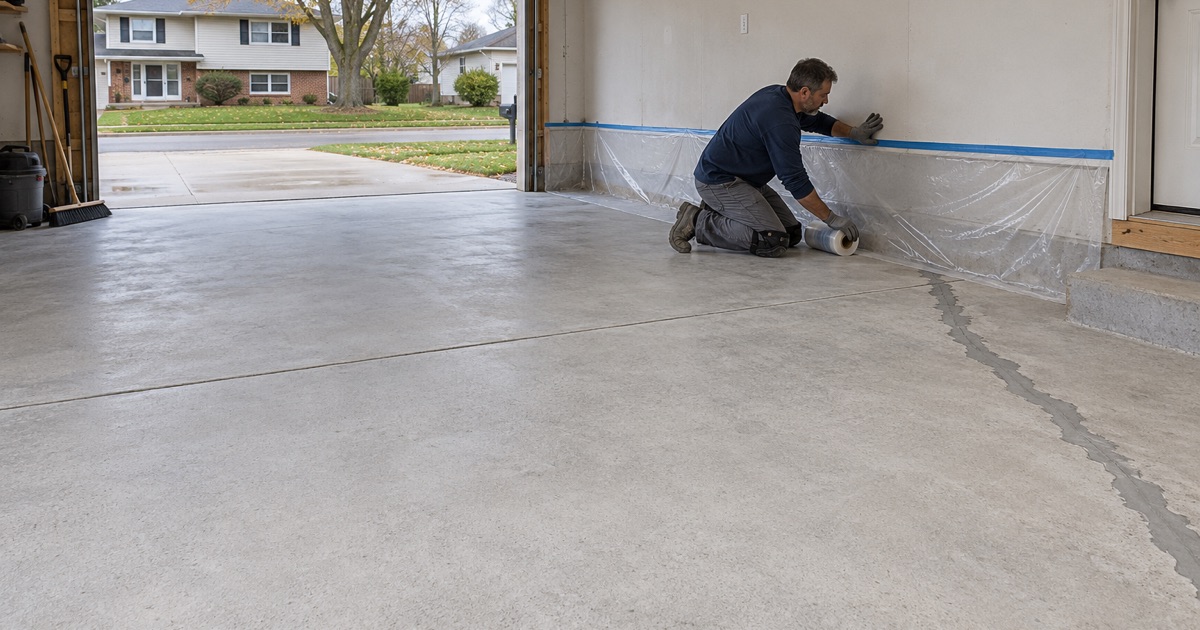
A garage job starts with a walk of the slab: cracks, old sealer, oil and the way water drains to the door. Then we grind, repair, test, coat, broadcast and topcoat. Most two-car floors take one to two working days, and parking waits for a cure measured against real slab temperature.
Grinding Through Sealer and Paint
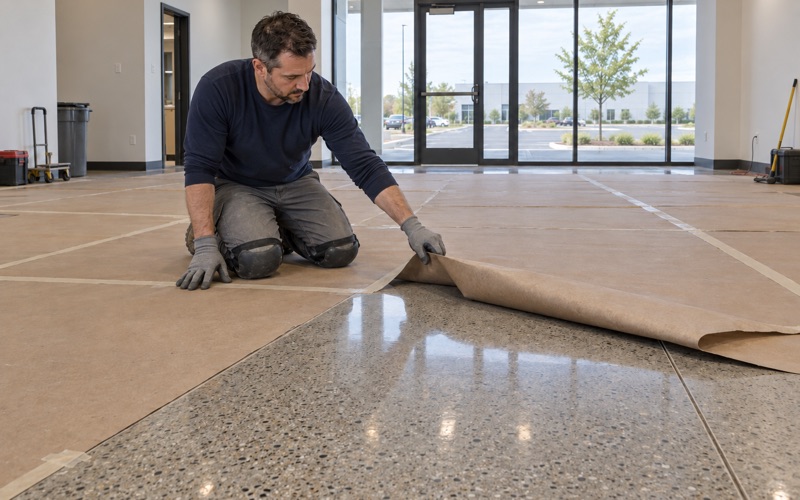
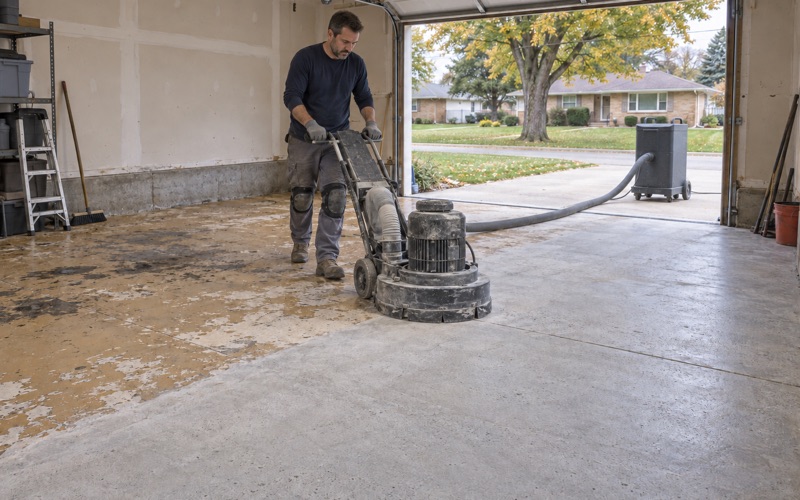
A coating rolled over sealed or painted concrete is only bonded to that old film, and when the film lets go the new floor goes with it. Diamond grinding removes both and leaves an open surface profile, so the epoxy locks into concrete instead of into whatever was there before.
Moisture Testing a Garage Slab
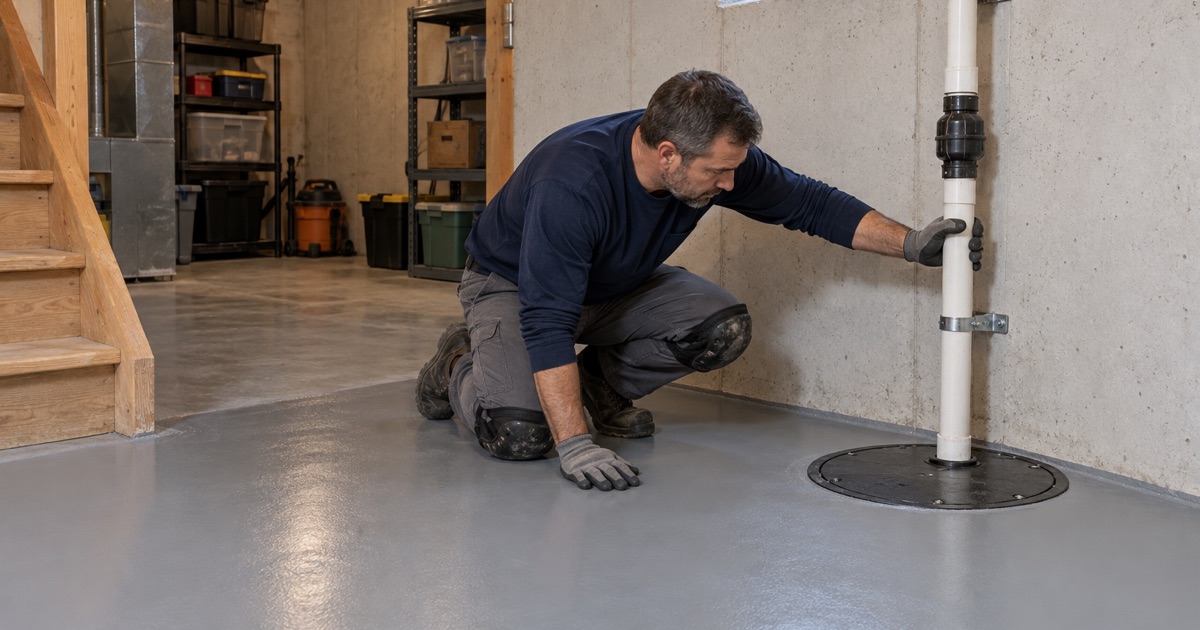
The IRC’s garage vapor retarder exception means many garage slabs were poured with no vapor barrier underneath. We test before coating, with an ASTM F1869 calcium chloride kit, ASTM F2170 in-situ probes or an ASTM D4263 plastic sheet check, so moisture is a known number before the floor is quoted.
Cracks, Settling and Romeoville Slab Rules
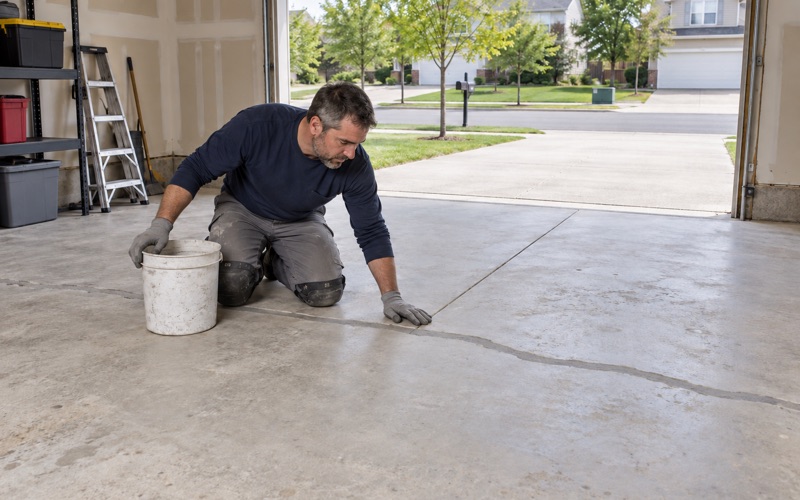
Hairline shrinkage cracks can be routed and filled, but a slab that has heaved, sunk or broken into plates needs repair or replacement first. Romeoville writes its own slab rules: a 4-inch slab with 6x6 wire mesh on compacted CA-6 gravel, which is what a replaced garage floor here gets poured to.
Garages From the 1990s and 2000s Subdivisions
Most Romeoville homes went up between 1990 and 2009, after the I-55 and Weber Road interchange opened. Their garage slabs have seen twenty or more winters of salt, tire traffic and freeze-thaw, so we expect surface scaling, pitted control joints and old sealers worn to patches.
Hampton Park’s Older Garage Slabs
Hampton Park dates from 1957, built on former wetlands along Route 53, and its garage slabs are among the oldest in the village. Concrete of that age often shows deeper scaling, patched sections and settled edges, so these floors get a closer look at repair before any coating is priced.
Calcium Chloride Brine and Rock Salt
Calcium chloride brine and rock salt ride into the garage on tires all winter, soak into bare concrete and recrystallize as it dries, slowly breaking the surface apart. A fully bonded epoxy with a chemical-resistant polyaspartic topcoat keeps that brine on top, where a squeegee can push it out the door.
Coating a Garage Through a Will County Winter
Epoxy needs warmth to cure, and polyaspartic is sensitive to condensation when the slab sits near the dew point. A heated, attached garage can often be coated through the winter. An unheated one usually waits for spring, and we say so at the estimate rather than at the failure.
Store-Bought Kits Versus a Ground and Built Floor
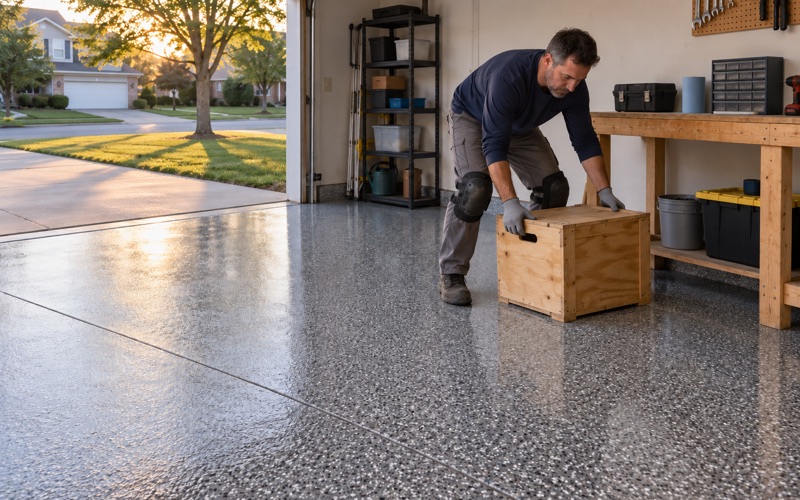
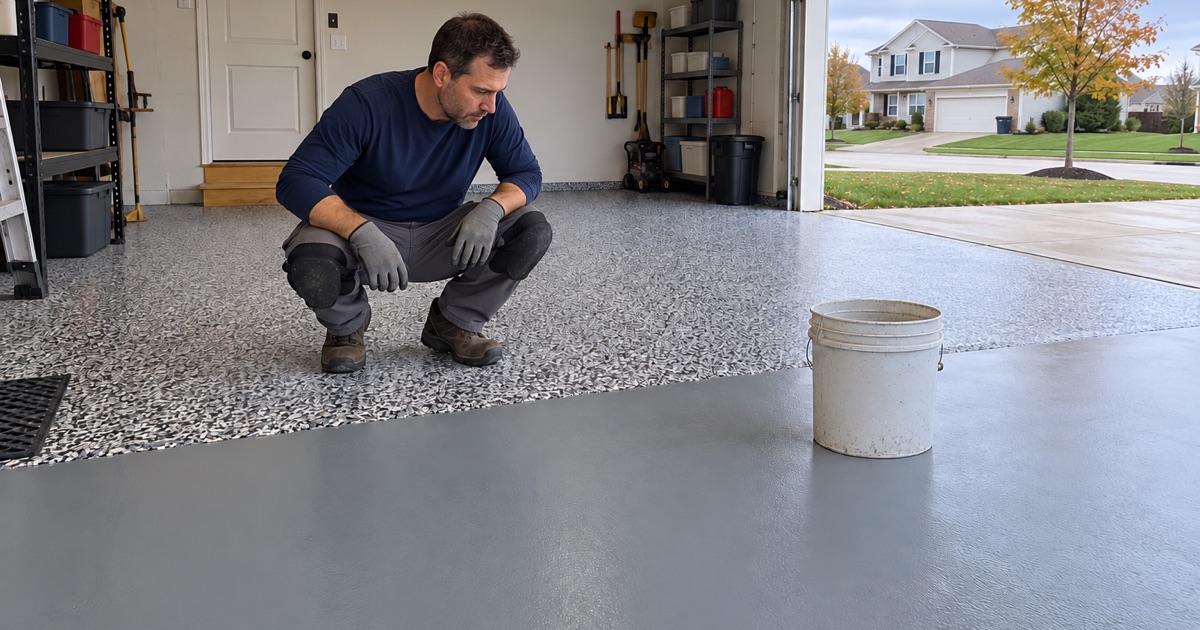
A hardware-store epoxy garage floor kit is a thin, water-based coat over an acid-etched slab, and hot tire pickup lifts it within a season. A professional floor is a ground slab, 100% solids epoxy, a full flake broadcast and a polyaspartic topcoat, built thick enough to carry a car.
We price per square foot for the system we propose, not from a national per-garage figure. The number moves with crack repair, the removal of old coatings, whether a moisture-mitigation primer is needed, the flake blend and the topcoat. Every item that changes the price is listed on its own line.
Reading a Coating Warranty’s Exclusions
Coating warranties nearly always exclude failures caused by moisture vapor or hydrostatic pressure from below, and many exclude hot tire pickup on systems the installer did not choose. We walk through the exclusions with you before the job is sold, moisture first, so nobody is surprised later.