
Romeoville Epoxy Flooring pours metallic epoxy floors in Romeoville, IL, serving surrounding cities including Lemont, Shorewood, Burr Ridge, Mokena and Warrenville. After more than 20 years working with concrete and resin, we treat metallic floors as the most demanding finish we install, because every step of the preparation shows in the final surface.
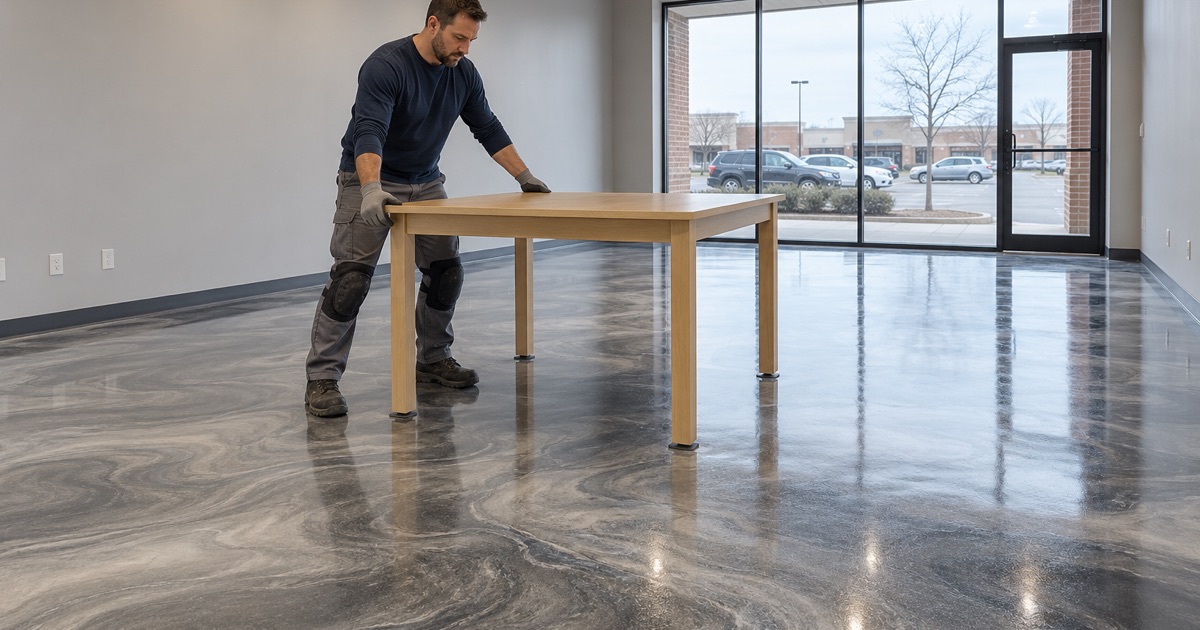
A metallic epoxy floor uses fine metallic pigment suspended in clear or tinted epoxy. While the resin is wet, the pigment moves and settles, creating a marbled, almost liquid look with depth that changes as you walk across it. No two floors turn out the same, and that is much of the appeal.
It is a finish for spaces where looks matter most: finished basements, showrooms, offices, salons, retail floors and the occasional show garage. We help you decide whether it suits your space and slab before anything is poured.
How a Metallic Floor Is Built
A Flawless Base Starts With Grinding
Metallic finishes are smooth and reflective, so they reveal every bump, trowel mark and patch underneath. We diamond grind the slab edge to edge, fill cracks and voids, and grind repairs flush so the surface is as flat and uniform as the concrete allows.
This preparation takes longer than it does for a flake floor, where the broadcast hides small imperfections. On a metallic floor there is nowhere to hide, so the grinding is where most of the quality is decided.
Primer and Base Color
After grinding, we apply a primer to seal the concrete and stop air bubbles rising from its pores into the metallic layer. Then a tinted base coat sets the background color, which strongly affects how the metallic pigment reads on top.
A dark base makes silver and copper tones look deep and dramatic, while a lighter base gives a softer, pearl-like effect. We choose the base and metallic colors together using sample boards.
The Metallic Pour
The metallic layer is mixed in small batches and poured in sections, then spread and manipulated while it is wet. Rollers, brushes, solvent spray and sometimes leaf blowers move the pigment to create veining, swirls or a lava-like flow.
Timing matters more here than anywhere else, because each batch has a short working window. Our crews work in a set sequence so the sections blend together without visible seams.
Design Choices
Colors and Combinations
Metallic pigments come in silvers, golds, coppers, blues, greens, charcoals and many more, and two or three can be combined in one floor. A single color reads calm and elegant, while multiple colors create stronger movement and contrast.
We recommend seeing samples under your own lighting. The same metallic can look cool and silvery under LED fixtures and warmer under daylight from a window or patio door.
Movement and Pattern
The pattern can be guided toward subtle cloud-like movement, bold marbling or a flowing river effect. We talk through the look you want, show photos of different techniques, and then guide the pour toward it, knowing that the final pattern will still be unique.
In a large room we plan the direction of the movement so it leads the eye toward the main view or entrance, rather than running across the room at random. Around columns, stairs and cabinetry we adjust the technique so the pattern flows around them naturally.
Gloss and Satin Finishes
A high-gloss topcoat brings out the most depth in a metallic floor, but it also shows dust and fine scratches. A satin topcoat softens the reflection and hides wear better, which suits busier floors such as salons and retail spaces.
Where people walk in with wet shoes, we can add a fine slip-resistant additive to the topcoat. It slightly softens the shine but makes a smooth metallic floor much safer near entrances, sinks and shampoo stations.
Where Metallic Floors Work Best
Basements and Living Spaces
Finished basements are one of the best places for a metallic floor. They see light traffic, little sunlight and no road salt, and a metallic finish turns a plain slab into a feature that makes a lower level feel finished rather than utilitarian.
Basements still need moisture testing first. A metallic floor is just as vulnerable to vapor pushing up from below as any other coating, and testing is a line item in our proposal for that reason.
Showrooms, Offices and Salons
Commercial spaces use metallic floors to make an impression. Car showrooms, design studios, offices and salons benefit from a floor that looks like a custom feature but cleans as easily as any other coated surface.
For these spaces we schedule work around business hours, including overnight and weekend windows, and collect grinding dust at the grinder so it never reaches drains or neighboring tenants. A showroom can often stay open in one half while we pour the other.
Garages, With Caveats
Some homeowners want a metallic garage floor, and it can be done. It is less forgiving than a flake floor under tires, winter salt and dropped tools, and smooth surfaces can be slick with snowmelt, so we add a slip additive to the topcoat and talk honestly about upkeep.
Protecting the Finish
UV-Stable Topcoats
Standard epoxy ambers in sunlight, which would dull and yellow the colors of a metallic floor. We seal metallic floors with a clear polyaspartic or polyurea topcoat that resists UV and abrasion, keeping the finish looking the way it did on the day it was poured.
The topcoat is also the sacrificial layer. Over years of use it takes the scratches and scuffs, and when it eventually looks tired it can be lightly sanded and recoated without disturbing the metallic layer underneath.
Everyday Care
A metallic floor is cleaned like any other coated surface: dust mop often, damp mop with a neutral cleaner, and wipe spills promptly. Felt pads under furniture legs and walk-off mats at doors keep grit from dulling the topcoat in the busiest paths.
Proposals, Pricing and Contracts
Metallic floors are quoted per square foot for the system proposed, with the primer, base coat, metallic layer and topcoat listed along with their finished thickness. Home jobs receive a written contract and the state’s consumer-rights pamphlet before work begins, as Illinois requires.
- 20+ Years on Concrete
- Moisture Tested Before Quoting
- Per-Square-Foot Written Quotes