
Romeoville Epoxy Flooring installs flake epoxy floors in Romeoville, IL, serving surrounding cities including Lemont, Shorewood, Burr Ridge, Mokena and Warrenville. In more than 20 years of coating concrete, the flake floor has become the system we install most, because it combines durability, grip and good looks at a sensible cost.
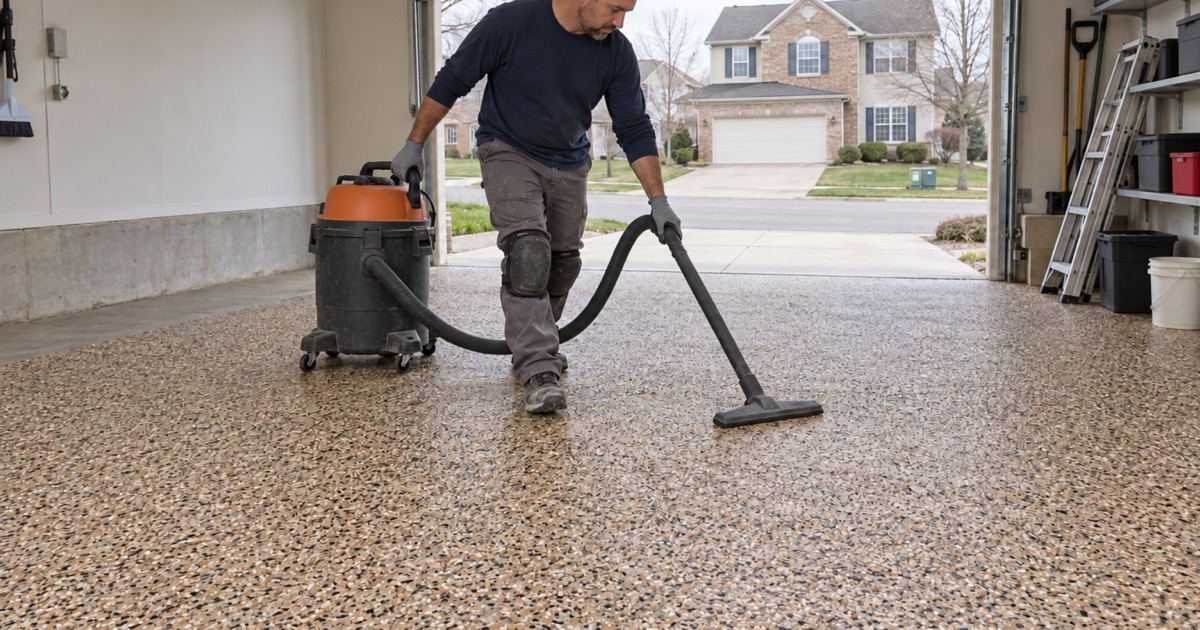
A flake floor is built in layers. Over a diamond-ground slab, we apply a 100% solids epoxy base coat and broadcast vinyl flake into it while it is wet, covering the surface completely. Once cured, the loose chips are scraped and vacuumed away, and a clear topcoat locks everything in place and takes the daily wear.
The result is a textured, multicolored surface that hides dust, footprints and minor scuffs, grips well under wet shoes and tires, and resists the oil, chemicals and winter salt a garage or workspace collects. It is the floor we most often recommend for garages, basements, workshops and many light commercial spaces.
What Makes a Flake Floor Last
Mechanical Preparation, Never Acid
Like every system we install, a flake floor starts with a slab opened by a diamond grinder or shot blaster. Grinding removes sealers, paint, oil residue and the weak surface layer, leaving a clean profile the epoxy can grip. We never acid etch, because it leaves residue behind and does nothing to remove old sealers.
Cracks, spalls and pitted joints are repaired and ground flush at this stage. The flake broadcast hides small imperfections well, but it cannot hold a broken slab together, so repairs come first.
Full Broadcast to Rejection
We broadcast flake into the wet base coat until the surface will accept no more, which installers call broadcasting to rejection. That full coverage gives a uniform look, builds thickness and creates the fine texture that makes a flake floor grip when wet.
A partial broadcast, where flake is scattered sparsely over a visible base color, costs less in material but is thinner and shows wear sooner. We explain both options and price them separately so you can decide.
The Clear Topcoat
The topcoat seals the flake and provides the wearing surface. On most floors we use a polyaspartic topcoat, which resists abrasion, chemicals and road salt and stays clear under sunlight instead of ambering like a standard epoxy.
Topcoat thickness controls how rough or smooth the finished floor feels. A thinner topcoat leaves more texture for grip, while a heavier one gives a smoother surface that is easier to mop. We help you choose based on how the space is used.
Choosing Your Look
Flake Blends and Colors
Vinyl flake comes in dozens of blends, from neutral grays and tans to bolder mixes with blues, reds or metallic accents. Light blends brighten a garage or basement, while darker, busier blends hide dirt and salt residue better between cleanings.
We bring physical samples to your home or business, because colors on a screen rarely match what you see under your own lights. Seeing a sample on the floor itself is the most reliable way to choose.
Chip Size
Flake is made in several sizes. Larger chips give a bold, busy appearance and hide more, while smaller chips create a tighter, almost granite-like look. Some blends mix sizes for a more natural texture.
Chip size has no effect on strength, since the topcoat does the protecting. It does change how the floor reads from a distance: small chips blend into an even tone from across the garage, while large chips stay visible as individual flecks.
Base Color Choice
Even under a full broadcast, the base coat color matters at the edges, around drains and anywhere the flake is thinner. We tint the base to blend with the flake so those areas look intentional rather than patchy.
Where Flake Floors Work Best
Garage Floors
Garages are the most common place for a flake floor. The texture grips under wet tires and shoes, the busy pattern hides dust and tire marks, and the polyaspartic topcoat resists the rock salt and calcium chloride brine that Will County winters bring in on every car.
The system also resists hot tire pickup, where thin coatings soften under warm tires and peel. Built on a ground slab with a full broadcast and proper topcoat, a flake floor stays bonded where the car parks.
Basements, Workshops and Laundry Rooms
In basements, a light flake blend brightens the space and handles laundry spills, dropped tools and gym equipment. Moisture testing comes first, because a basement slab can push vapor up from below, and a moisture-mitigation primer goes under the base coat when readings call for one.
Light Commercial Spaces
Showrooms, offices, break rooms, locker rooms and retail back rooms all benefit from a flake floor’s durability and easy cleaning. For heavy chemical exposure, hot washdown or constant forklift traffic, we usually recommend a quartz, urethane cement or heavy-duty epoxy system instead.
In commercial spaces we often pair a flake floor with a coved base at the walls in locker rooms and restrooms, so the floor can be mopped right up to the edge. Businesses with tight schedules can have the work done overnight or on a weekend.
Planning and Pricing
Curing and Scheduling
We schedule installs against slab temperature and the dew point spread at the surface, not a fixed calendar date. In an unheated garage in deep winter, that often means waiting for spring, and we say so at the estimate rather than risk a soft or cloudy topcoat.
Most residential flake floors take one to two working days from grinding to topcoat. Walk-on time and the date you can park are both set by how the topcoat actually cures at your slab’s temperature, and we give you those dates before we leave.
Per-Square-Foot Proposals
Flake floors are quoted per square foot for the specific system proposed. The proposal names the base coat, the flake blend and coverage, the topcoat and the finished thickness, along with any crack repair or coating removal, so you can check the installed floor against the quote.
Home jobs also receive a written contract and the state’s consumer-rights pamphlet before work starts, as the Illinois Home Repair and Remodeling Act requires, and we read through the warranty exclusions with you, moisture first.
- 20+ Years on Concrete
- Moisture Tested Before Quoting
- Per-Square-Foot Written Quotes